
Uber In Mexico City & Other Helpful Tips For Getting Around
Before we spent nearly a month in Mexico City, I presumed I would become an expert on riding the city’s Metro system. I’m generally a big fan of using public transportation when we travel. It not only helps keep us on budget, but I also think it’s a great way to experience local everyday life. And Mexico City’s metro system is very inexpensive and easy to use. However, it didn’t take me long to discover that Uber is really the ideal way for visitors to get around town. Here’s a look at everything I learned about using Uber in Mexico City, why I think it’s your best overall transportation option, and my experience with the alternatives.
Some of the links in this post may be affiliate links. If you buy something after clicking one of these links, I may earn a small commission. This does not cost you anything extra and helps support this blog.
Contents
Mexico City is Big
But first, let me point out the obvious. Mexico City is big. It’s the second largest city in the Americas. And its main touristic sites are spread out. If you look at my post on The 10 Most Essential Things To Do In Mexico City, it will be clear that you’ll likely visit a wide variety of neighborhoods. So you can’t count on your feet to get you from site to site. Even though I always prioritize walking during our travels, we used some sort of transportation almost every day in Mexico City.

The Cost & Convenience Of Uber
The two main reasons that Uber became my go-to method of transportation was cost and convenience.
Uber in Mexico City is relatively inexpensive compared to the US or Europe. The average cost for a ride within the central part of the city was about 4-5 USD. This was even less expensive than a one way Metro fare for the two of us in Paris!
And then Uber in Mexico City is more convenient too. While the Metro system is extensive, with multiple lines and stations throughout the city, I found that the stations weren’t always conveniently located for our needs. For example, the Metro runs along the edges of Roma Norte and La Condesa – two of the city’s most popular neighborhoods for tourists. But they don’t take you into the heart of these neighborhoods. In most circumstance, it was simply faster for us to take an Uber.
(I should also mention that Didi is a second ride share option in Mexico City. I did not try it during our stay.)

Is Uber in Mexico City Safe?
I rode Uber over 30 times in Mexico City and never once felt unsafe. The company itself also seemed very focused on safety in Mexico City. For example, here’s an Uber billboard that was located directly across the street from our Airbnb.

It encourages you to use Uber’s PIN identification system. This system ensures that you get into the correct car. (Uber in Mexico City usually does not have any window identification. You’ll look for the license plate, car type, and car color match. And most drivers will flash their lights as they approach).
I did enable this function within the App. Then every time a driver arrived, they had to enter my PIN number into their own phone before they could commence the ride. Here’s a screenshot of what this PIN system looks like…

I also noticed that many drivers were using Uber’s dashboard video cam to ensure their own safety. The Uber App would notify me about this too if in use during my ride.
Also the Uber App can check with you if your car goes significantly off course or if you are stopped for a prolonged time. We never found ourselves in this situation while using Uber in Mexico City. But we did when using Uber in Cartagena Colombia where we frequently experienced lengthy roadwork delays. And I was impressed at how effective it was.
(You do need to enable this feature within your Uber App. Just go to the Safety Hub in your Account Settings.)
Uber Ride Options In Mexico City
In the screenshot below, you can see the typical Uber ordering interface in Mexico City (note that the prices are in Pesos). Uber X and Comfort were my two most commonly used options

I found that there was usually a marked difference between the UberX and Comfort experiences. Comfort cars were usually bigger and were always nicer on the inside than UberX. And the price difference was never significant. In the screenshot above, the Comfort car only cost about 1 USD extra. Sometimes I would order an UberX if the distance was short, but we used Comfort far more often. And I always ordered Comfort for our longer trips, such as those to Coyoacan and Xolchimilco. (You can read all about my Coyoacan visits in my post Coyoacan, Mexico City – 6 Things You Shouldn’t Miss)
Then once I’d ordered an Uber in Mexico City, it never took long for our car show up. Generally they would come within a few minutes. I think the longest we waited was 8 minutes.
Uber at the Airport
So what about using Uber in Mexico City for airport transportation? Unlike our experience in Merida, Uber is allowed at the Mexico City airport pickup zones, and it is a very convenient option. Upon our arrival, we used Uber to take us to our Airbnb.
When we exited the baggage claim area within Terminal 2, I did not find any signage directing me towards an Uber pickup area. However as I ordered my Uber, the App gave me the option for pickup at either Door 3 or Door 4. Once we exited the airport through Door 4, it was easy to spot the pickup location at a nearby curb.
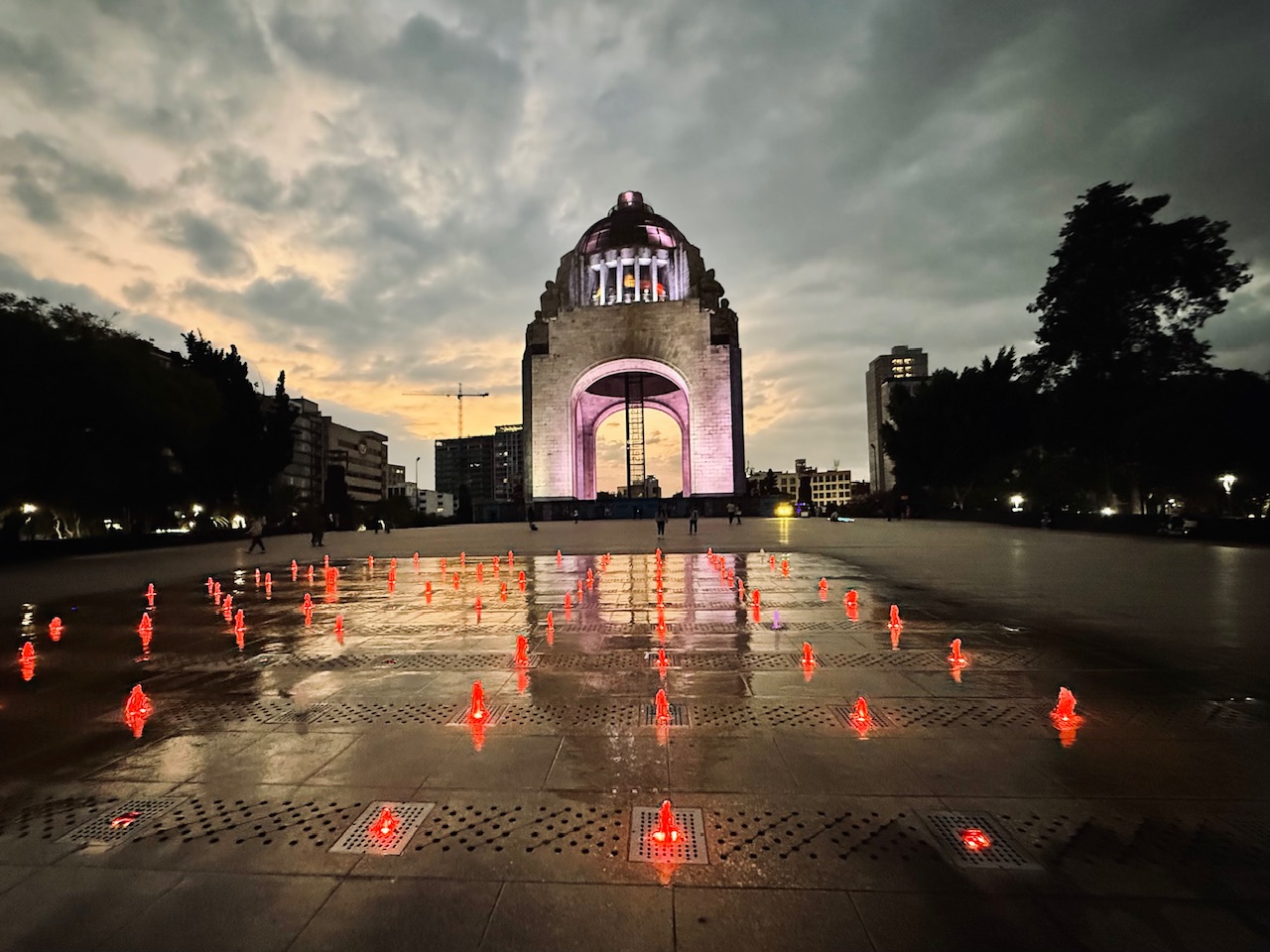
Our Uber ride from the airport to our Airbnb near the Monument to the Revolution on Reforma Avenue cost 15 USD. The Comfort size car was adequate for our 3 pieces of luggage (I don’t think a typical Uber X would have been).

Uber at the TAPO Bus Station
Another important transportation hub in Mexico City is TAPO – the city’s central bus station. After we finished our time in Mexico City, we spent a week in Puebla. And we used Mexico’s ADO bus company to get us back and forth from Puebla. If you will be traveling by intercity bus in Mexico like we did, there’s a good chance you’ll be visiting the TAPO Bus Station.

TAPO is huge! It’s the largest bus station we’ve come across in our travels so far. While we did use Uber to get to TAPO, we did not use Uber when we returned from Puebla. When we disembarked our bus, we were deep inside the huge station complex somewhere. And it wasn’t obvious where to even think about getting an Uber.
So in this situation, we did end up taking a taxi. Fortunately, this was very easy. I saw a taxi rank and an attendant directed me to a kiosk just inside the main building. (Fortunately, I understand some Spanish as I have explained elsewhere on this blog, due to my time spent with Dreaming Spanish).
At the kiosk, I was able to prepay our taxi fare based on our destination (which I showed the attendant on Google Maps). I then took my ticket out to the taxi rank and was assigned the next available car. The whole process was very safe and professional. It did cost about 40% more than a comparable Uber ride. But it was much easier than wandering around the depths of TAPO with our luggage trying to figure out where to order an Uber. (This type of service is also available at the airport if you prefer taxi over Uber upon arrival.)

Uber at Autobuses Del Norte
Another bus station that you’ll possibly visit during your time in Mexico City is Autobuses del Norte. This bus station in the north part of the city, and is where you’ll find the bus to Teotihuacan (and its famous pyramids). If you take a DIY day trip from Mexico City to Teotihuacan like we did, you’ll be taking the bus from this station.
And when you return from your day at Teotihuacan, it’s much easier to find an Uber than at TAPO. When you exit the bus station you’ll see a passenger pickup bay directly across the street. This is likely where you will be dropped off at the beginning of your day. And this is where you’ll meet your Uber driver when you get back.

So What About Taxis in Mexico City?
My TAPO taxi experience was the only one I had during our time in the city. It’s recommended that tourists never hail a taxi directly from the street in Mexico City for safety reasons. If you do need to use a taxi, you should always grab one from your hotel or an official taxi stand (you will see these near popular tourist sites). You can also ask your restaurant to call one for you. But again, it’s so much easier to use Uber in Mexico City, I don’t see any reason to really ever use a taxi.

Using the Metro in Mexico City
While we did mostly use Uber in Mexico City, we did occasionally take the Metro. We used the Metro when the route was direct and when I determined that it would be faster than Uber (using the time estimates on Google Maps).

Purchasing Your Metro Card
Using the Metro in Mexico City is easy. You will need to purchase a plastic rechargeable transit card at one of the machines located inside every station. The machines have an English language option and are easy to use.

The card itself only costs 15 Pesos (a little less than 1 USD). You can then load it with as much money as you want. You can use the card on all forms of public transportation in Mexico City. If you are traveling as a couple or a family, you can share one card between all of you. You will use it to pass through the Metro gates, and you will scan it when you board a bus.
(When I bought our card, the machines were temporarily out of order. I used the station’s ticket window instead. And the attendant would only sell me one card. She told me to use the one card for the both of us. And it makes sense – why waste a card?)

Each time you pass through the station gate, 5 pesos are deducted from your card. That’s right! The current cost for a Metro ride in Mexico City is only 5 pesos (about 30 cents).
Tips For Riding the Metro
I’d read that the Mexico City Metro could be quite crowded, but I personally never found crowding to be a problem. I thought the Metro systems in Madrid and Paris (and even Lyon) were far worse in that regard. Of course it depends on time of day and we never rode the Mexico City Metro during rush hour (on purpose).

You will also want to be aware that each train has a 1-2 cars designated solely for females and children. These sections are marked on the platform and the interiors of these train cars are painted pink.

And what about safety on the Mexico City Metro? As with Uber in Mexico City, I never felt unsafe while riding the Metro. As with crowded Metro systems worldwide, you need to be aware of pickpockets and you should also guard your cellphone. But I often saw a police presence on the platforms and always felt completely comfortable.

Using the MetroBús
Mexico City also has an extensive bus network. And on rare occasion I would take the bus rather than using Uber. Again, it would depend on the route and also very much on the time of day. Riders are often packed into these buses like sardines during the city’s lengthy rush hour periods. As with the Metro, Google Maps will show you suggested routes and approximate travel times.
The MetroBús is the type of bus most commonly used by tourists. It consists of 7 routes that run along dedicated bus lanes through the central part of the city. Many of the stations actually look like train stations, and feature a turn-style entrance and sliding bus-entry doors.


Also, one of the MetroBús lines features double-decker buses that travel up and down the city’s central Reforma Avenue.

The bus fare costs 6 Pesos and you will need to scan your transportation card when you board. You will also want to be aware that the buses have an exclusive section for women and children too.
Even though these buses have dedicated lanes, I did not find that they traveled much faster than surrounding traffic. Add to this the fact that they were generally always packed, and you can appreciated why I very much preferred Uber in Mexico City.
Mexico City’s Unique CableBús System
Most tourists in Mexico City will never really have a reason to ride the city’s most unique form of public transportation – the CableBús. This overhead system of transportation is found in the outskirts of the city and consist of three different cable car lines.

However, if you have time in your Mexico City itinerary, I strongly recommend that you consider taking this CableBús tour. I did and it was one of the highlights of my time in the city.
The tour will take you to Mexico City’s largest borough called Iztapalapa. It gives you great insight into a less touristic part of the city. This area is not frequented by tourists and so it is best to visit with a guide. The highlight of this tour is riding the CableBús in Iztapalapa. This is the world’s longest urban cable care line and is used by the locals for public transport. The views are absolutely spectacular.

Final Thoughts
Hopefully all this information helps you put together your own plans for getting around Mexico City. You should now understand why I think using Uber in Mexico City is your best transportation option under most circumstances. Its reasonable cost and its overall convenience made it the clear winner for us.
If you would like to learn about other practical tips for navigating your way around Mexico City as a tourist, then check out my post called A Practical Mexico City Travel Guide: 12 Important Tips
If you would like read more about traveling in Mexico City, then be sure to check out these posts:
The Best Traditional Food In Mexico City You Don’t Want To Miss
Is Eating Michelin-Starred Tacos at El Califa De Leon Worth It?
I enjoyed this helpful guide, Steven.
Interesting too how Uber is a smart alternative to mass transit. Taking the convenient option is worth it.
Glad you like it Ryan. Uber is always so very useful for us when it’s affordable.